How to know if your dog is overweight? The ultimate guide to evaluating their health at home
We all love to spoil our dogs. That tender look when we are eating dinner or the joy with which they receive a treat often makes us show our love through food. However, this habit can lead to a silent and very common problem: excess weight in dogs.
Obesity in dogs is not just an aesthetic issue; it is a medical condition that can significantly reduce their life expectancy and quality of life. As responsible caregivers, it is our duty to ensure their well-being, but when living with them every day, weight changes often go unnoticed.
If you are wondering if your dog has a few extra pounds, you are in the right place. In this article, we will teach you how to evaluate their physical condition simply and explain what steps to take to get them back in top shape.
The risks of overweight in dogs
Before moving on to the evaluation, it is important to understand why the ideal weight is so crucial. An overweight dog is much more likely to develop serious health problems, among which the following stand out:
- Joint problems: Diseases such as osteoarthritis and hip dysplasia drastically worsen with excess weight.
- Cardiovascular and respiratory diseases: The heart and lungs must make an extra effort to oxygenate a larger body.
- Diabetes mellitus: Just like in humans, obesity is a very high risk factor for diabetes.
- Lower life expectancy: Veterinary studies have shown that dogs at their ideal weight live, on average, up to two years longer than those with obesity.
3 Steps to know if your dog is overweight
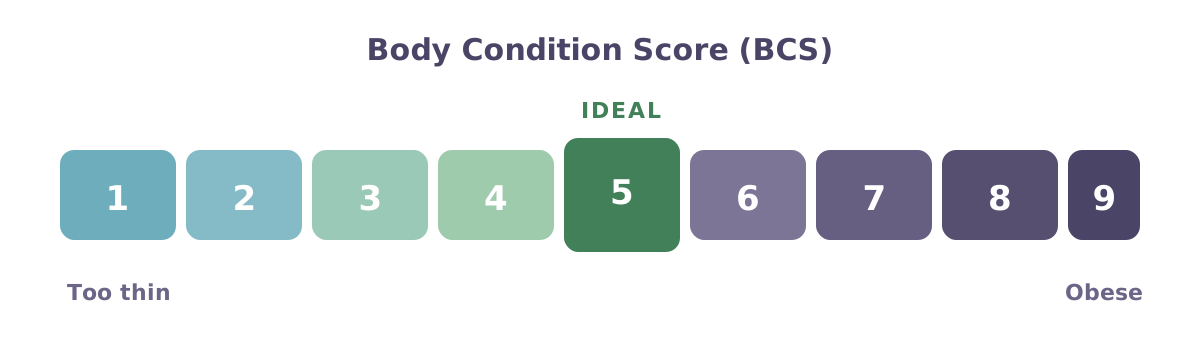
You don't need a professional scale to do an initial assessment at home. Vets use a system called the Body Condition Score (BCS), which is based on observation and palpation. Here we explain how to apply it at home:
1. The visual test from above
Stand up and look at your dog from above while they are standing.
- Ideal weight: You should be able to see a clearly defined waist behind the ribs, giving their body a shape similar to an hourglass.
- Overweight: If their body is oval-shaped, looks like a barrel, or their back is completely straight and wide with no dip at the waist, it is very likely they have extra pounds.
2. The visual test from the side
Crouch down to be at your dog's eye level and observe them from the side.
- Ideal weight: Your dog's abdomen should be "tucked up". That is, their stomach line should curve upwards right after the ribs and before the hind legs.
- Overweight: If their stomach line is completely parallel to the ground or, worse, hangs down, there is an obesity problem.
3. The palpation test (The hand test)
This is the most reliable method, especially for dogs with a lot of hair (like Golden Retrievers or Samoyeds), where sight can deceive us.
Place your thumbs on your dog's spine and spread your fingers over their ribs. Run your hands gently along their sides:
- Very thin: The ribs are visible to the naked eye and feel pointy, like touching the knuckles of your hand when you make a fist.
- Ideal weight: The ribs are not visible, but you can easily feel them under a thin layer of fat. The sensation should be similar to touching the back of your hand when it is flat.
- Overweight: You have to press hard to be able to feel the ribs, or you simply cannot find them. The feeling is like touching the padded base of your thumb on the palm of your hand.
Behavioral signs
Extra weight also changes the way your dog behaves. Pay attention to these warning signs:
- Gets tired very quickly during daily walks.
- Pants excessively, even if it is not hot or they haven't done intense exercise.
- Struggles to get out of bed or jump onto the couch (when they used to do it without a problem).
- Shows apathy or less desire to play.
My dog is overweight, what do I do now?
If after doing these tests you suspect your companion needs to lose weight, don't feel guilty and take action! Here is the roadmap to follow:
- Go to the vet: Before changing their diet, it is essential to rule out that the weight gain is due to medical problems (such as hypothyroidism). Your vet will give you the exact target weight.
- Adjust their diet: Weigh their daily food ration. We often measure "by eye" and give them 20% more than they need. If necessary, the vet will recommend a low-calorie dog food (light or satiety-inducing).
- Be careful with treats: Treats should not make up more than 10% of their daily calories. Swap them for healthy options like small pieces of carrot, apple, or green beans.
- Increase physical activity progressively: Don't make them run marathons overnight. Lengthen walks by 10 minutes each week and include low-impact games, like hiding their food so they use their sense of smell, or swimming if possible.
- Keep a constant record: Weight loss in dogs should be gradual (between 1% and 2% of their body weight per week). A strict record will help you stay motivated and know if the strategy is working.
💡 The ally for their health: Losing weight requires consistency. In our app, you can easily log your dog's weight over time, track their walks, and note their progress. Keeping detailed records from your phone will help you share accurate data with your vet and celebrate every little achievement of your best friend.
Remember that saying "no" to those begging eyes when they ask for food from the table is also a form of love. A dog at their ideal weight is a happier, more active dog who will be by your side for many more years.