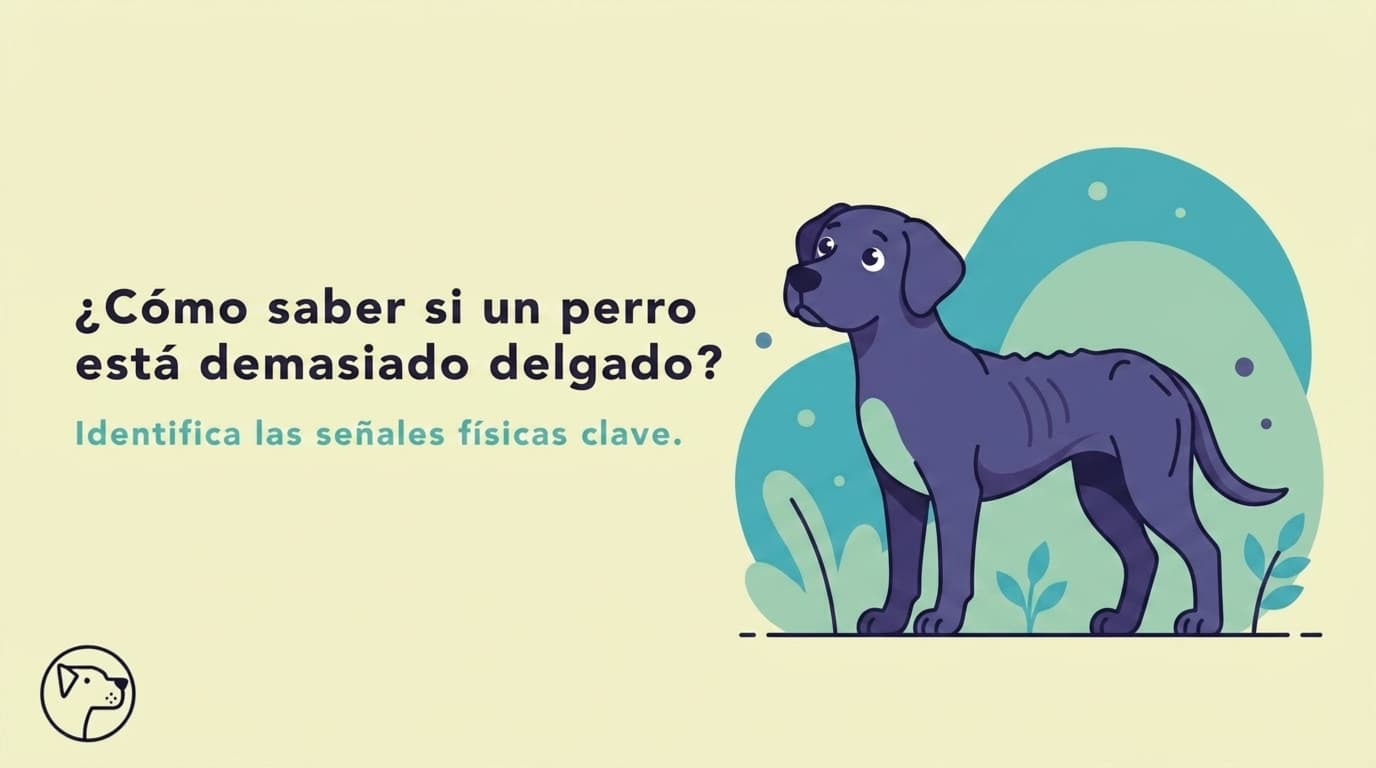
How to Tell if a Dog Is Too Thin
Seeing a slim dog does not always mean something is wrong. Some dogs are naturally lean, very active, or belong to breeds with a narrow build, such as greyhounds, podencos, or whippets. But there is an important difference between being fit and being too thin.
An underweight dog may have less energy, lose muscle, tolerate cold poorly, and be more vulnerable to health problems. The key is to look beyond the number on the scale: you need to observe their body, feel their ribs, and consider their overall condition.
This guide will help you make a first assessment at home and recognize when it is time to ask your vet for help.
The most useful way to assess thinness
Veterinarians often use the Body Condition Score. It is a scale that estimates body fat through observation and touch.
On a common 1-to-9 scale:
| Score | Body condition |
|---|---|
| 1 to 3 | Too thin |
| 4 to 5 | Ideal weight |
| 6 to 9 | Overweight or obese |
You do not need to assign an exact score to do a first check. Focus on three areas: ribs, waist, and abdomen.
1. Check the ribs
Run your hands gently along your dog's sides without pressing too hard.
In a dog at an ideal weight, the ribs should not be sharply visible, but you should be able to feel them easily under a thin layer of fat. It feels similar to touching the knuckles on the back of your hand when your hand is flat.
Your dog may be too thin if:
- The ribs are clearly visible when your dog is relaxed.
- The ribs feel very sharp to the touch.
- There is almost no fat layer over them.
- The spine, hips, or pelvic bones are also prominent.
In long-haired dogs, appearance can be misleading. That is why touch is more reliable than looking from a distance.
2. Look at the waist from above
Stand over your dog and look down while they are standing.
A dog in good condition usually has a visible waist behind the ribs. The body narrows before reaching the hips, but it should not look deeply sunken or excessively angular.
Your dog may be too thin if the waist is extremely pronounced, if the body narrows abruptly, or if the hip bones stick out clearly.
3. Check the abdomen from the side
Look at your dog from the side. At a healthy weight, the abdomen usually tucks up slightly after the ribs.
That is normal. What is more concerning is a very tucked-up abdomen, too many visible bones, or a dog that seems to have lost body volume over a short period of time.
4. Assess muscle condition
Thinness is not only about fat. A dog can also lose muscle, especially in the back legs, shoulders, spine, and head.
Watch for:
- Thinner thighs than before.
- Less strength when climbing stairs or getting up.
- A more prominent spine.
- A more sunken head or temples.
- Loss of body volume even if appetite is unchanged.
Muscle loss can happen in senior dogs, dogs with chronic disease, or animals that have been inactive for a long time. It can also be a sign that something is wrong even if the scale has not changed much.
Signs that thinness may be a problem
Besides body shape, pay attention to your dog's behavior and habits. Contact your vet if you notice:
- Fast or progressive weight loss.
- Extreme hunger but continued weight loss.
- Poor appetite.
- Diarrhea, vomiting, or abnormal stool.
- Dull coat or excessive shedding.
- Tiredness, weakness, or lethargy.
- More thirst or urination than usual.
- Coughing, breathing difficulty, or pain.
A dog losing weight without an obvious reason needs a checkup. Simply feeding more without knowing the cause is not enough.
Common causes of low weight in dogs
There are many reasons a dog may be too thin. Some are easy to correct, but others need diagnosis and treatment.
Possible causes include:
- Not enough food for their size, age, or activity level.
- A food that is too low in calories or not suited to their needs.
- Too much exercise without enough energy intake.
- Dental problems that make eating difficult.
- Intestinal parasites.
- Digestive disease that affects nutrient absorption.
- Diabetes, kidney disease, liver disease, or hormonal disorders.
- Chronic pain, stress, or anxiety.
- Older age and muscle loss.
That is why it is important not to assume the problem can be solved just by increasing the ration.
Should you feed more if your dog is thin?
It depends.
If your dog is healthy, active, eating well, and only slightly below ideal condition, they may simply need a ration adjustment or a more appropriate food. But if they have lost weight for no clear reason, have digestive symptoms, seem lethargic, or are older, they should see a vet first.
Increasing food suddenly can cause diarrhea or vomiting, especially if the dog has been eating little for a while. The safest approach is to make gradual changes and measure the daily amount with a kitchen scale.
How to help a dog gain weight safely
If your vet rules out disease and confirms your dog needs to gain weight, these steps can help:
- Use a complete food suited to their age and activity level.
- Increase the ration gradually, not all at once.
- Split food into two or three meals if large meals are difficult.
- Keep treats under control so they do not replace a balanced diet.
- Weigh your dog every one or two weeks.
- Monitor stool, energy, and appetite during the change.
The goal is not rapid weight gain. The goal is to rebuild body condition and muscle steadily.
Puppies, senior dogs, and adopted dogs
Some situations require extra care.
Puppies need enough energy to grow, but they also need a balanced diet. If a puppy is thin, do not improvise with supplements. Ask your vet to avoid deficiencies or excesses.
In older dogs, weight loss may be related to muscle loss, chronic disease, dental pain, or metabolic changes. It should not be dismissed as “normal” without checking.
In adopted or rescued dogs, recovery should be gradual. Giving too much food at once to a very thin dog can cause serious digestive problems. In cases of marked malnutrition, the feeding plan should come from a veterinarian.
When to contact your vet
Make an appointment if your dog:
- Loses weight without a change in diet or activity.
- Is very thin or has prominent ribs, spine, and hips.
- Eats a lot but keeps losing weight.
- Has vomiting, diarrhea, or abnormal stool.
- Seems lethargic, weak, or painful.
- Is a puppy, senior, or has a pre-existing condition.
- Was rescued in poor body condition.
Your vet can assess body condition, check teeth and abdomen, weigh your dog, and, if needed, recommend blood tests, fecal tests, or other diagnostics.
In summary
To tell if a dog is too thin, do not look only at weight. Observe and feel their body:
- Ribs should be easy to feel, but not sharply visible.
- The waist should be visible, but not deeply sunken.
- The spine, hips, and pelvis should not stick out clearly.
- Muscle loss matters too.
- Unexplained weight loss needs veterinary attention.
A slim dog can be healthy, but a dog who is losing weight, has prominent bones, or changes appetite should not be ignored. Spotting the problem early helps you adjust nutrition or treat an underlying issue before it progresses.
Sources consulted
- WSAVA Global Nutrition Committee. Body condition score and nutrition assessment resources.
- American Animal Hospital Association. Nutritional assessment guidelines for dogs and cats.
- Merck Veterinary Manual. Weight loss and nutritional disorders in small animals.